Sources checked 3 November 2026 · Confirm your date with the provider
Some links are affiliate links. We may earn a commission on qualifying bookings at no extra cost to you. This does not determine your price or guarantee availability.
Choose the destination before the transport
Start with your hotel's exact island and map pin. For Don Det and Don Khon, the familiar approach combines road transport to Nakasang with a passenger boat. Don Khong has a road connection and needs a different transfer plan. A request for “a ticket to 4000 Islands” may be understood as the common Don Det route even when your reservation is elsewhere. That ambiguity is easy to prevent before payment and frustrating to resolve after arrival.
Send the accommodation name to the seller and ask for the endpoint in writing. If a package includes a boat, establish which landing it serves and whether the final walk or collection is yours to arrange. If you buy stages separately, keep the driver and host informed about the same plan. Choosing the base first is therefore a transport decision as much as an accommodation decision.
Use Pakse as a gateway, not a timing guarantee
Pakse is the main southern-Laos reference point for many island journeys and regional excursions. Its airport is on the official Lao eVisa entry-port list checked for this guide, but nationality and document requirements still need your own official check. Air and overland services can change. Use the carrier's or seller's current booking information for your date rather than relying on a guide's remembered departure time.
An arrival in Pakse does not mean you are already close enough to ignore the onward journey. You still need to collect bags, obtain transport, travel south and, for the southern islands, make the boat connection. Compare a same-day transfer with a Pakse overnight based on the confirmed schedule. A late or uncertain arrival is a good reason to avoid an inflexible island check-in expectation. The Pakse guide helps make that overnight useful.
Treat Nakasang as a handover point
At Nakasang, the important task is to match your arriving road service to the correct boat and destination. Keep the accommodation details visible and confirm the landing before bags are loaded. If the seller issued a combined ticket, ask who you should meet and how the boat operator recognises it. A receipt or message is more useful than an informal promise that somebody at the river will know what to do.
Allow time for the ordinary friction of changing modes: walking to the landing, organising bags, checking the boat and waiting for the agreed departure. Do not use every minute of a road estimate as though it were guaranteed. The dedicated Nakasang guide explains the final stage, including the questions to ask when the river level changes the boarding surface or your hotel is not near the main Don Det landing.
| Stage | Confirm before departure |
|---|---|
| Road journey | Actual pickup, mainland drop-off and luggage terms |
| Mainland handover | Who identifies the boat and whether its fare is included |
| Island crossing | Destination landing, fitted lifejackets and boarding assistance |
| Landing to room | Walking route or collection, especially with luggage or access needs |
Plan around daylight and confirmed assistance
This guide does not publish a universal last boat or fixed Nakasang fare because no authoritative current schedule covering all services has been verified. Ask the accommodation or operator about your actual arrival date and retain that confirmation. Aim to arrive with daylight and enough time to find the correct service calmly. If delayed, contact the host while still on the mainland and agree a new plan before assuming a special boat will be waiting.
A fallback can be a revised transfer, a mainland stop or an overnight in Pakse, depending on where you are and what can be confirmed. It should be practical rather than an abstract instruction to “allow extra time.” Know which reservation can be changed and how to reach the relevant provider. Avoid arranging a night crossing solely because a hotel room has already been paid for; the safety and availability of transport must stand on their own.
Make the boat stage fit your group
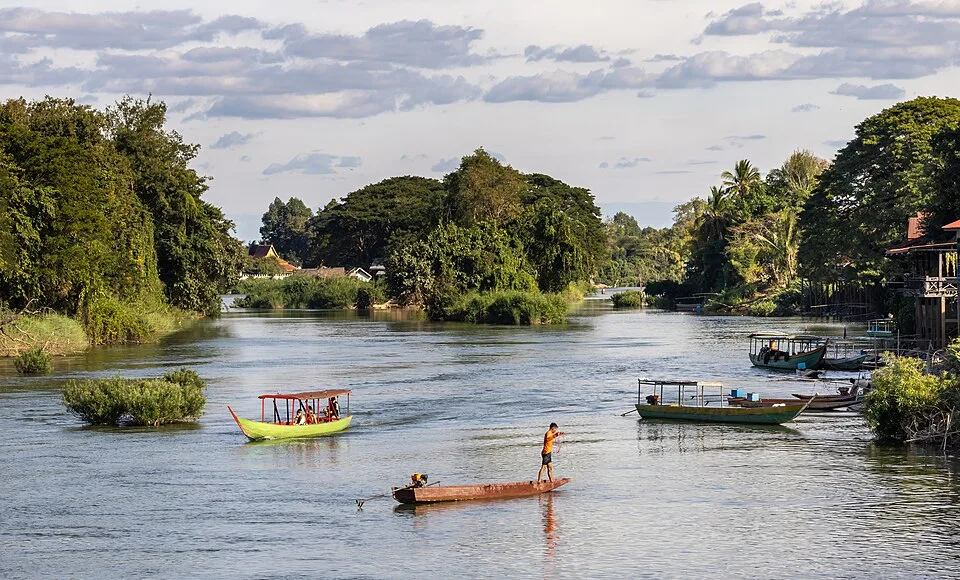
Look for suitable lifejackets and avoid an overcrowded vessel. Consider balance, seat height, the step between bank and boat and how bags will be handled. Conditions at a landing can vary with water level, so an easy photograph from another season is not a dependable access description. Tell the host about mobility needs or young children before the transfer is arranged, not when the boat is already ready to leave.
Pack with the transfer in mind. Protect documents and electronics from rain and splashes, keep essential medication accessible and avoid carrying more loose items than you can manage while boarding. Let the crew explain the order for entering and loading. Do not move around for photographs while the boat is underway. The access guide provides more detailed questions without assuming that a particular vessel or route is suitable for everyone.
Keep onward plans from compressing the arrival
Do not plan a substantial island activity immediately after a long, uncertain transfer unless the provider has explicitly allowed for the arrival window. An afternoon spent checking in, eating and orienting yourself is useful time. It lets you choose a bicycle, talk through a river excursion and understand the next day's meeting point without rushing. A delayed arrival then changes the evening rather than ruining an expensive activity reservation.
The same logic applies when leaving. Flights and international crossings deserve their own buffer, and a through-ticket still needs a clear sequence of boat and vehicle stages. Save contacts and meeting locations offline because a weak connection should not make your plan disappear. The departure guide and the border guide address those later decisions, which are best considered before you commit every available night to an island room.
Indicative distances, times and fares
For orientation only: Route 13 runs south from Pakse to the Nakasang turn-off, a road journey commonly given as roughly 130–150 km and around three hours by bus or minivan, longer with stops. The Lao tourism authority puts Khone Phapheng, just south of the islands, about 150 km from Pakse. Local buses have used Pakse's southern bus station (Km 8), while tourist minivans usually collect from hotels or agencies in town.
Wikivoyage contributors reported a shared Nakasang–Don Det boat at about 20,000 kip per person in 2023, with solo travellers sometimes paying for two seats, and combined minivan-and-boat tickets from Pakse at roughly 60,000–65,000 kip. Treat these as dated indications, not fares to insist on. Nakasang is also described as the last practical place for an ATM and shopping before the boat, so arrive with kip already in hand.
| Stage | Indicative figure | Keep in mind |
|---|---|---|
| Pakse → Nakasang by road | About 130–150 km; around 3 hours | Varies with vehicle, stops and road works |
| Nakasang → Don Det by boat | Roughly 10–25 minutes | Depends on the landing and river level |
| Shared boat fare | About 20,000 kip per person (reported 2023) | Confirm locally; a solo crossing can cost more |
| Pakse minivan + boat ticket | About 60,000–65,000 kip (reported) | Check exactly which landing is included |
Questions before you go
Is there a direct train to Don Det?
No rail arrival to the islands is presented in this guide. Plan the southern journey through verified current road and air services, with the appropriate final boat for Don Det or Don Khon.
Does a Pakse–Don Det ticket always include the boat?
Not necessarily. Ask exactly what the ticket covers, where the vehicle stops, which boat landing it serves and whether any luggage or final transfer charges remain.
What is the last boat from Nakasang?
There is no universal time verified here. Confirm your specific date and service with the operator or host and arrange a daylight arrival with a realistic fallback.
Can I stop at Khone Phapheng on the way?
A private or specifically arranged itinerary may allow it. Confirm the stop, additional time, costs and effect on the final boat connection before departure.
How long does the trip from Pakse to Don Det take?
Allow most of a morning or afternoon: around three hours by road to Nakasang, then a short boat crossing, plus waiting and handover time. Treat any quoted time as an estimate and keep daylight in hand.
Sources & editorial notes
We use official tourism, conservation and heritage records, operator information and accommodation listings. Publisher notes summarize the evidence; the full bibliography retains individual sources. A source check is not a live operating-status check.
- Lao Tourism Marketing Department ↗
- Lao Ministry of Foreign Affairs ↗
- UK Foreign, Commonwealth & Development Office ↗
- Bolaven Tours ↗
- GetYourGuide / Southern Breeze Joint stock company ↗
- Booking.com / property listing ↗
- Wikivoyage ↗