Sources checked 3 November 2026 · Confirm your date with the provider
Some links are affiliate links. We may earn a commission on qualifying bookings at no extra cost to you. This does not determine your price or guarantee availability.
Understand what the seasonal labels mean
The Mekong River Commission uses June to October as the wet-season period and November to May as the dry-season period in its flood and drought forecasting work. General travel advice for Laos often describes a rainy season from May to October. These are useful broad frameworks, not competing promises about the exact day the weather changes. Transition periods and local storms do not follow a booking calendar.
The river also reflects rainfall and water management beyond the island where you are standing. A sunny day on Don Det does not prove that every channel is calm or that an excursion will operate. Use the seasonal distinction to choose clothing, flexibility and trip length; use current forecasts and local operator decisions for the actual outing. The MRC portal offers regional monitoring context, while your provider must assess its own route.
| Broad period | Planning emphasis | What it does not guarantee |
|---|---|---|
| Drier period, broadly November–May in MRC reporting | Heat, shade, drinking water and current landing access | Calm channels, safe swimming or no rain |
| Wetter period, June–October in MRC reporting | Flexible transfers, current path checks and a workable fallback | Identical conditions each day or universal tour operation |
| Transition weeks | Recent forecast and direct local confirmation | A fixed seasonal changeover date |
Plan a dry-season stay around daylight and heat
The drier part of the year may appeal if walking, cycling and unhurried outdoor meals are your priorities. Even then, plan shade, drinking water and rest rather than treating a clear forecast as permission to remain active all day. Room comfort matters: compare fan and air-conditioned categories, mosquito protection and the ability to sit comfortably outside without assuming every riverfront bungalow has the same facilities.
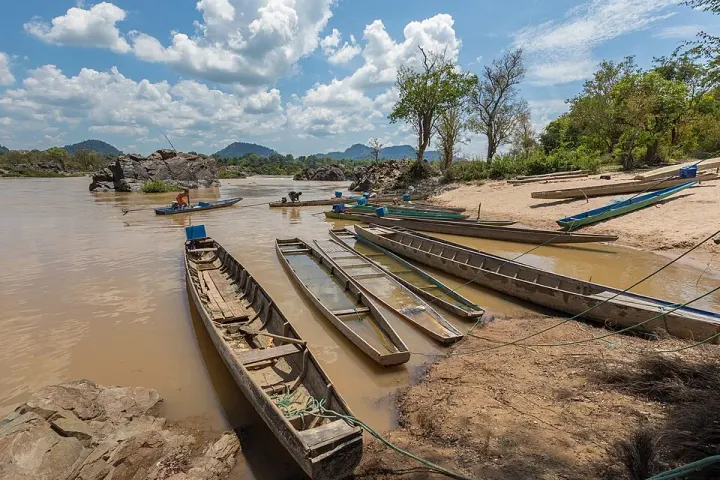
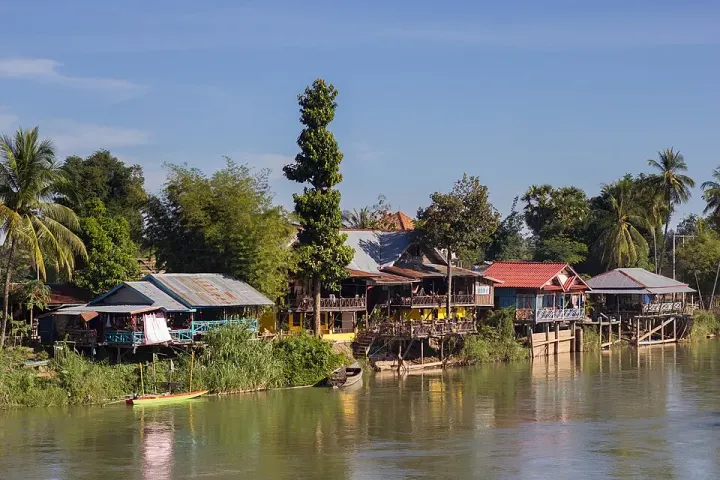
Lower-water scenery can expose different banks and channels, changing the look of a photograph and potentially the practical landing used by a boat. Ask your host about the current arrival point and the route from it to the room. Avoid choosing a property solely because an old photograph shows an easy boardwalk from the water. The accommodation guide explains the arrival questions that matter in any season.
Give a wet-season trip more flexibility
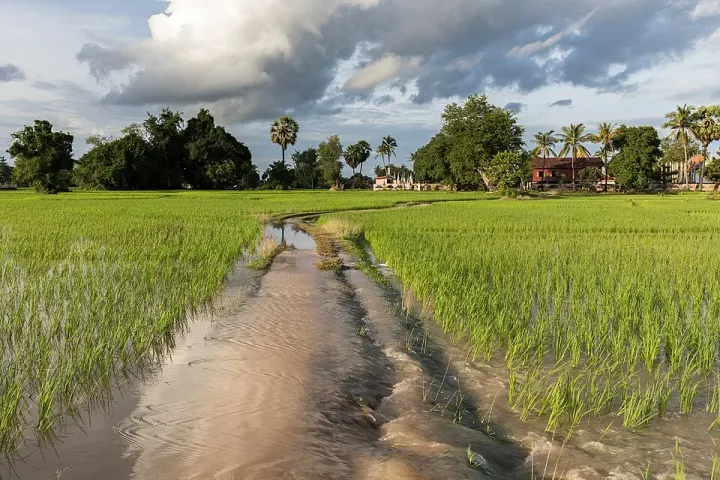
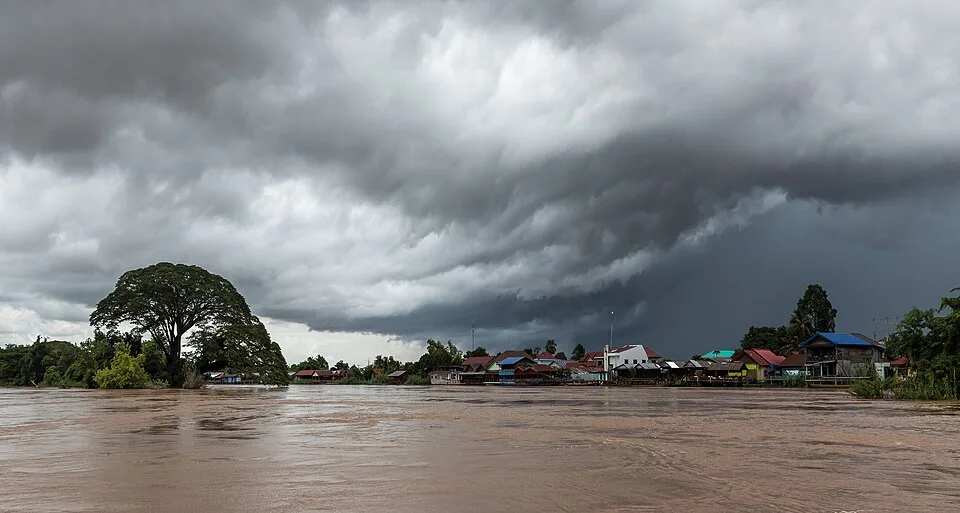
Rain can bring lush fields and dramatic skies, but those visual attractions come with practical demands. Build a trip that still works when a boat activity, a long cycle or a waterfall path is unavailable. A comfortable room, a nearby restaurant and time to wait can be more valuable than an ambitious list of stops. Confirm access and cancellation arrangements rather than assuming that a listed tour runs in every condition.
FCDO guidance notes seasonal flooding and landslides in Laos. The consequences for your journey may occur on the road to the islands as well as on the river. Check the mainland transfer before leaving Pakse and ask the host whether local access has changed. Waterproof luggage protection is useful, but it cannot solve a disrupted road or a cancelled crossing. Our transport guide helps separate those stages.
Visit waterfalls for the landscape you find
Khone Phapheng and Li Phi are flowing river landscapes, not a fixed display with one correct appearance. Water volume, visibility and the appearance of rocks or vegetation change. Choose a visit because you want to see the river system and surrounding landscape; avoid arranging the entire trip around replicating a particular photograph taken in another month or year.
Higher water is not automatically better for every viewpoint, and lower water is not a swimming-safety signal. Respect barriers, closures and staff instructions regardless of how inviting an exposed rock or pool appears. Ask which viewing paths are open on the day. If you want both waterfalls, remember that Khone Phapheng is a mainland outing and Li Phi belongs to the Don Khon visitor circuit, so each needs its own practical plan.
Choose your booking flexibility deliberately
If your dates are fixed, flexibility in the itinerary becomes more valuable. Give the islands enough time that one changed afternoon does not remove the whole reason for visiting. Read accommodation cancellation terms and each tour's weather provisions separately: a cancellable room does not imply a refundable transport ticket, and a tour cancellation does not automatically pay for an extra night.
If you can move dates, compare the complete trip rather than just a cheaper room. Flights, mainland transfers and onward plans may offset the saving. We do not publish a universal high-season price calendar because actual inventory and terms vary by property and date. Use the budget guide to compare live totals and leave a reserve for an unexpected mainland overnight or a revised transfer.
Use current information in the right order
First check a time-stamped forecast for the area and any relevant official warnings. Then contact the accommodation or transfer operator about the road-to-boat connection. Finally reconfirm the specific river or outdoor activity with the provider responsible for it. These checks answer different questions; one reassuring message about the weather cannot confirm every part of the journey.
For a multi-day visit, make the first full day flexible and reconfirm the following day's activity locally. Save a simple alternative, such as a short nearby walk, a meal or time at your accommodation, rather than inventing an equally demanding replacement. The three-day itinerary is built around this principle. An unhurried island stay tolerates changing conditions much better than a schedule of fixed departures and prepaid activities in every available hour.
Month-by-month climate pattern
Long-term averages for Pakse, the nearest large weather station, show the broad pattern. December to February is the coolest and driest period, with average January lows around 19 °C and almost no rain. March to May brings the heat, with April averaging daytime highs near 36 °C. July and August are the wettest months, each averaging more than 400 mm of rain.
For many visitors that makes November to February the most comfortable time for cycling and walking, while the hot months reward early starts and long lunches. The wet season brings green fields, fuller channels and the most powerful waterfalls, but also more disruption. The Lao tourism authority notes the Wat Phou festival near Champasak in February; its date follows the lunar calendar.
| Months | Typical conditions | Planning note |
|---|---|---|
| Nov–Feb | Drier and cooler; December–February driest | Popular period; keep room bookings flexible |
| Mar–May | Hottest months; April peaks | Start early, rest at midday, consider air-conditioning |
| Jun–Oct | Wet season; July–August wettest | Allow for delays and a higher, faster river |
Questions before you go
Which month guarantees the best river conditions?
None. Broad wet and dry periods help with planning, but daily weather, upstream conditions and local route decisions determine what is practical on your dates.
Are the wet-season months exactly the same in every source?
No. MRC forecasting uses June–October as its wet-season period, while general Laos travel advice often describes rain from May–October. Treat both as broad context, especially near transitions.
Does low water make swimming safe?
No. Water level alone does not establish safety; currents, obstacles and local conditions still matter. This guide does not recommend an unverified swimming spot.
Should I avoid a short visit in the rainy season?
A short visit can be possible, but it leaves less room for disruption. Choose flexible bookings and a workable mainland fallback, and accept that the river activity you hoped for may change or be cancelled.
What is the most comfortable time to visit?
Many travellers find November to February most comfortable because it is drier and less hot; April is usually the hottest month. Weigh that against busier periods and your interest in a fuller river.
Sources & editorial notes
We use official tourism, conservation and heritage records, operator information and accommodation listings. Publisher notes summarize the evidence; the full bibliography retains individual sources. A source check is not a live operating-status check.
- Mekong River Commission ↗
- UK Foreign, Commonwealth & Development Office ↗
- Lao Tourism Marketing Department ↗
- Booking.com / property listing ↗
- Wikipedia ↗