Sources checked 3 November 2026 · Confirm your date with the provider
Some links are affiliate links. We may earn a commission on qualifying bookings at no extra cost to you. This does not determine your price or guarantee availability.
Put the waterfall on the mainland route
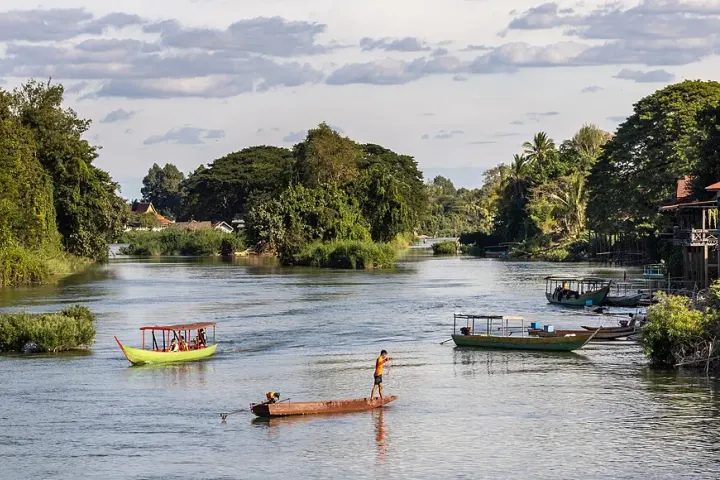
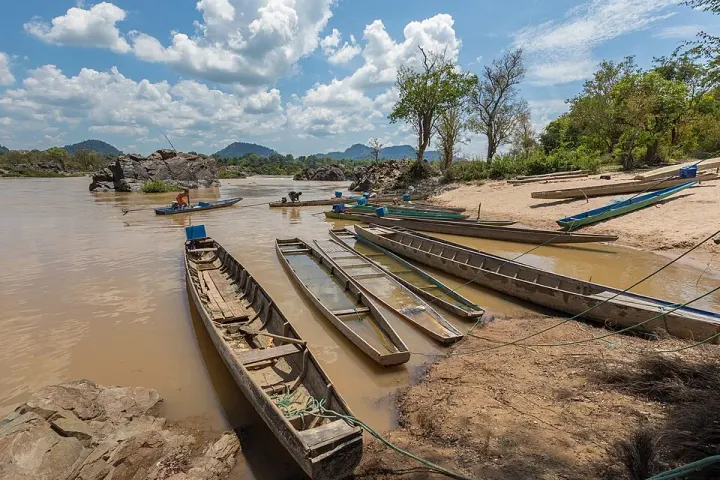
The Lao tourism authority places Khone Phapheng east of Don Khon, with road access from Route 13. That makes it a different planning exercise from crossing the old railway bridge and visiting Somphamit. If you stay on Don Det or Don Khon, the outing generally needs an island-to-mainland connection as well as road transport. Ask your host or provider to explain the complete sequence rather than quoting only the driving portion.
A visit can sometimes be fitted into a private arrival or departure itinerary, but only when the timing is deliberately arranged. Agree on baggage storage, the waterfall stop and the final boat or hotel connection. An attractive detour is less attractive if it leaves you negotiating an uncertain late crossing. The arrival guide explains that tradeoff, while the Li Phi guide helps you decide which waterfall better fits a short stay.
Visit for the river's movement and scale
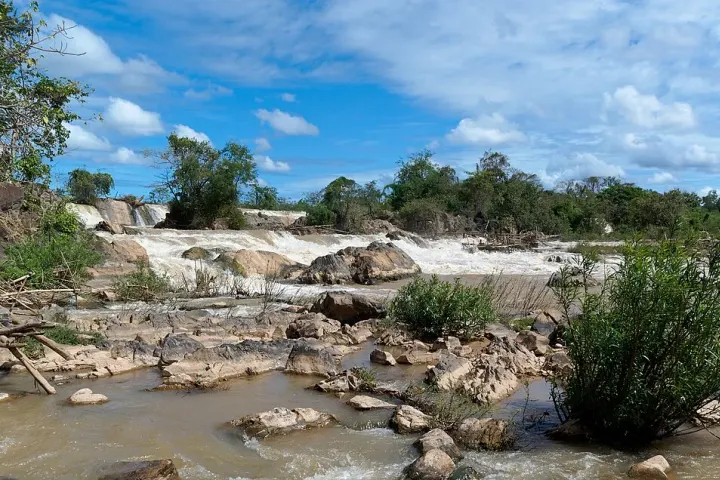
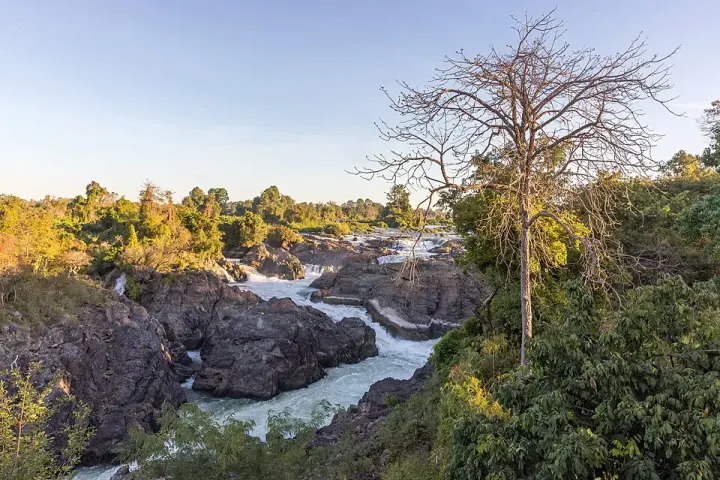
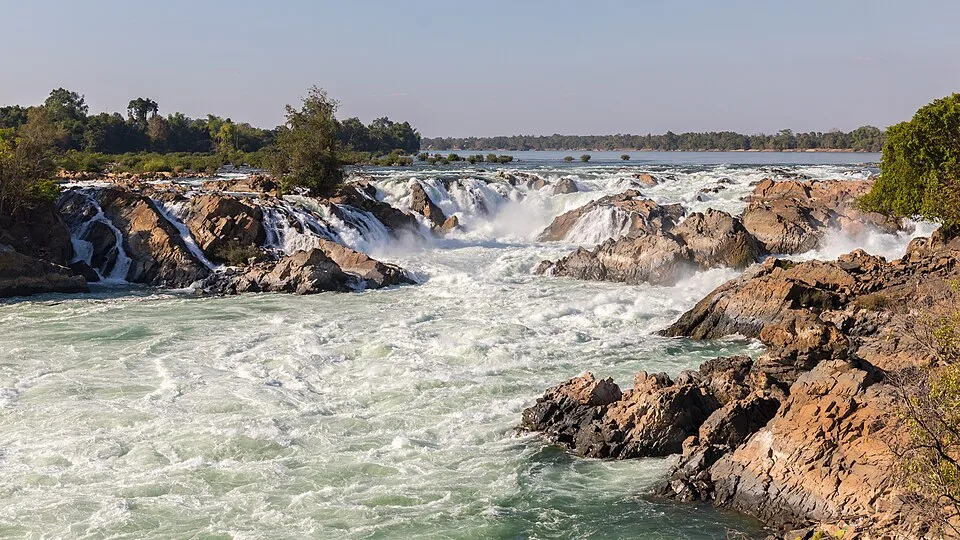
Khone Phapheng is part of the powerful barrier of rapids and falls that shaped transport through this section of the Mekong. The tourism authority describes it as the region's largest waterfall by water volume. Rather than relying on superlatives or a single measurement, pay attention to the breadth of channels, the changing surface and the sound of water moving across rock. Different viewpoints can show different aspects without requiring you to approach an unsafe edge.
Allow time to stand and observe. A hurried photograph from one stop can flatten a landscape whose interest is movement and sound. Keep to designated public viewing areas and follow local signs. If spray affects a path or visibility is poor, there is no need to complete every viewpoint. The purpose is to experience the falls from a suitable place, not to prove that you reached the closest possible rock.
Check the access you actually need
Ask about current entrances, paths, steps and transport within the visitor area before travelling if mobility is a concern. A road-accessible attraction is not automatically step-free throughout. Confirm how far you will walk from the drop-off and whether there are places to rest. Recent infrastructure elsewhere in the district does not establish the condition of every waterfall path. Use current local information for the exact route you intend to take.
Wear shoes with grip, carry drinking water and protect equipment from rain and spray. Keep children close near edges and moving traffic. Avoid putting bags or tripods where they obstruct other visitors. An umbrella may be useful in some conditions but awkward in wind or on a narrow path; choose equipment you can manage safely. The access guide provides questions to ask before choosing a tour that includes the falls.
Compare a dedicated outing with a combined tour
A dedicated road outing lets the waterfall be the main event. A combined island kayak itinerary may include Khone Phapheng after paddling and a vehicle transfer. The verified full-day kayaking description does so, but the shorter option should not be assumed to include every stop in the long itinerary. Confirm the selected duration, physical requirements and where the day finishes. The activity's name alone does not describe the full transport chain.
If you prefer not to paddle, ask for a road-and-boat arrangement that meets your needs rather than booking a demanding river activity only to reach the waterfall. Establish whether entrance charges, meals and all transfers are included. A guide can add interpretation, but a driver-only arrangement and a guided excursion are different services. Read the provider's specific terms and compare like with like before deciding which price represents better value.
Expect the river to look different by season
The Mekong's appearance changes with rainfall and river level. Wet-season conditions can bring stronger flow and more spray, while lower water reveals different rocks and channels. These broad seasonal tendencies do not predict the view or operating conditions on a specific day. The Mekong River Commission publishes monitoring and forecasts, but local authorities and operators determine current visitor arrangements. A dramatic photograph from another month is not a guarantee of today's experience.
Leave enough flexibility that heavy rain or changed access does not force an unsafe visit. Ask the provider what happens if the site or part of the planned route cannot be used. If you are combining the waterfall with an island transfer, reconfirm both stages; one operating does not prove the other is suitable. The seasonal guide explains how weather, heat and river levels affect the broader stay without promising a perfect month.
Keep wildlife and swimming claims out of the decision
Some current marketplace listings for Khone Phapheng still promise a boat ride to see local Irrawaddy dolphins. WWF's account of the last known transboundary-pool dolphin's death in 2022 contradicts that expectation. This guide excludes such promises from its recommended description of the trip. Choose the waterfall for the landscape itself and ask any provider with outdated copy to explain the actual itinerary before you commit.
Khone Phapheng is a powerful waterfall-viewing destination, not a place this guide recommends for swimming. Do not infer safety from a quiet patch of water, a local photograph or somebody else's behaviour. Strong currents and hidden obstacles are recognised Mekong hazards. The conservation guide provides the wildlife context, and river awareness explains the practical distinction between enjoying a riverbank and entering the water.
Location and entry figures
The Lao tourism authority describes Khone Phapheng as the largest waterfall by volume in Southeast Asia. It places the falls about 150 km south of Pakse via Route 13, roughly 13 km from the Cambodian border and around 6 km south of Don Det. From the islands, the usual approach is a boat to Nakasang and a short drive south on Route 13.
Entry charges have changed in recent years. A July 2023 WeAreLao report said the province had stopped selling tickets in January 2023 and placed Khong District in charge of the site; before that, foreigners paid 35,000 kip, or 55,000 kip with a vehicle and toilet use. Some guides still quote 55,000 kip. Carry kip, because card payment and an ATM should not be assumed at the falls.
Questions before you go
Is Khone Phapheng on Don Khon?
The visitor approach described by the tourism authority is on the mainland east of Don Khon. Plan the road stage and any island boat connection separately.
Can I visit both major waterfalls in one day?
A specifically arranged itinerary may combine them, but Somphamit and Khone Phapheng require different approaches. Confirm all transfers and avoid turning a short island stay into a rushed circuit.
Is admission included in a kayaking tour?
It depends on the selected product and option. Ask the provider to confirm the exact route and charges; a half-day option may not follow the published full-day itinerary.
Will I see dolphins on this outing?
Do not expect local dolphin sightings. The last known dolphin in the Laos–Cambodia border pool died in 2022, despite obsolete claims that remain on some travel pages.
Is there an entrance fee at Khone Phapheng?
Arrangements have changed: a 2023 report described ticket sales ending, while some guides still list about 55,000 kip for foreigners. Carry kip and confirm at the site or with your driver.
Sources & editorial notes
We use official tourism, conservation and heritage records, operator information and accommodation listings. Publisher notes summarize the evidence; the full bibliography retains individual sources. A source check is not a live operating-status check.
- Lao Tourism Marketing Department ↗
- UK Foreign, Commonwealth & Development Office ↗
- Mekong River Commission ↗
- WWF-Laos ↗
- GetYourGuide / Laos Easy Go Travel ↗
- Booking.com / property listing ↗
- WeAreLao ↗