Sources checked 3 November 2026 · Confirm your date with the provider
Some links are affiliate links. We may earn a commission on qualifying bookings at no extra cost to you. This does not determine your price or guarantee availability.
What happened to the local dolphin population
WWF reported that the last known dolphin in the Laos–Cambodia transboundary pool was found dead on 15 February 2022. Its statement, published two days later, described the population as having been functionally extinct since 2016 and the death as likely marking national-level extinction in Laos. That evidence makes a contemporary local dolphin-spotting promise inappropriate. We do not list a Don Det or Don Khon dolphin excursion as a recommended experience.
This is a specific statement about the local transboundary population, not a claim that all Irrawaddy dolphins everywhere are extinct. Dolphin conservation elsewhere in the Mekong requires its own current research and location-specific information. If you are planning a Cambodian wildlife visit, consult current conservation sources for that place rather than assuming the old Si Phan Don outing has simply moved to a nearby landing.
Why outdated claims still appear
Tourism text can persist long after conditions change. Older official destination pages, travel articles and even live commercial products may repeat descriptions written when dolphins were still present. The existence of a booking button proves only that a product is listed; it does not independently validate every wildlife claim in its itinerary. We excluded a live waterfall product from this site's selection because its copy continued to promise local dolphin viewing.
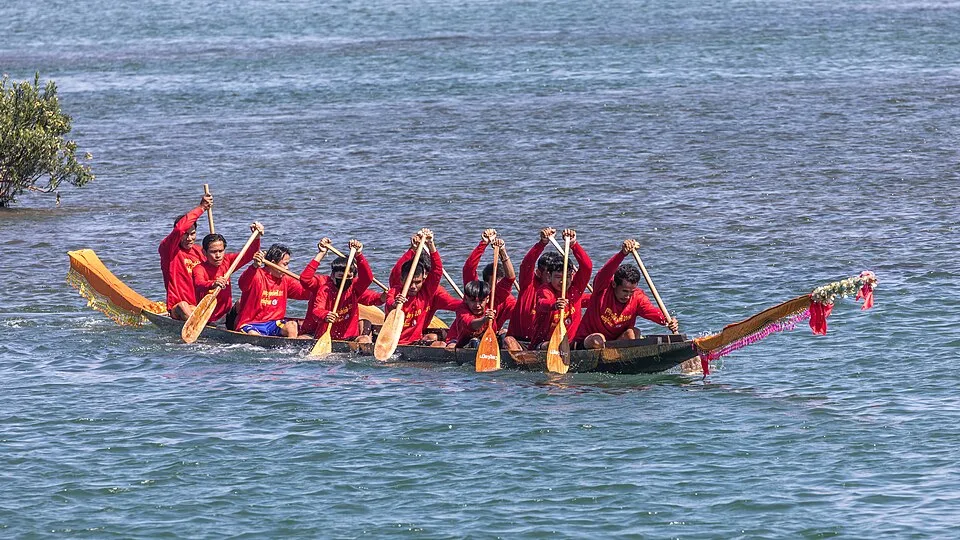
When a provider makes that claim, ask what location it means, what current conservation evidence supports it and whether the itinerary can be described without a sighting promise. Avoid paying for an activity on the assumption that a rare animal will appear. The boat guide instead focuses on crossings, paddling and river landscapes that can be described honestly while still requiring current operating checks.
Value the river without making wildlife perform
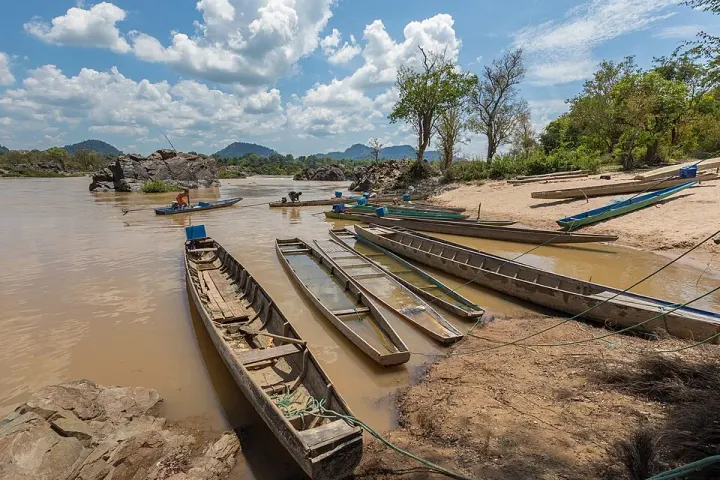
The islands remain a rich setting for understanding how people live with the Mekong: boats, fishing activity, agriculture, village trade and the historical challenge of navigating the falls. A guide can explain these relationships without guaranteeing wildlife. Ask for an interpretation of the landscape and the communities rather than a checklist of animals. Quiet observation from a respectful distance is often more informative than trying to approach every interesting subject.
Do not feed or bait animals for a photograph, handle wildlife or buy a product merely because it is marketed as exotic. Avoid experiences built around distressing handling or forced contact. This site uses genuine licensed photographs, but a historic image is not an endorsement of every activity depicted in a location. Conservation is better served by accurate information and thoughtful choices than by repeating an appealing story that is no longer true.
Keep village visits respectful and ordinary
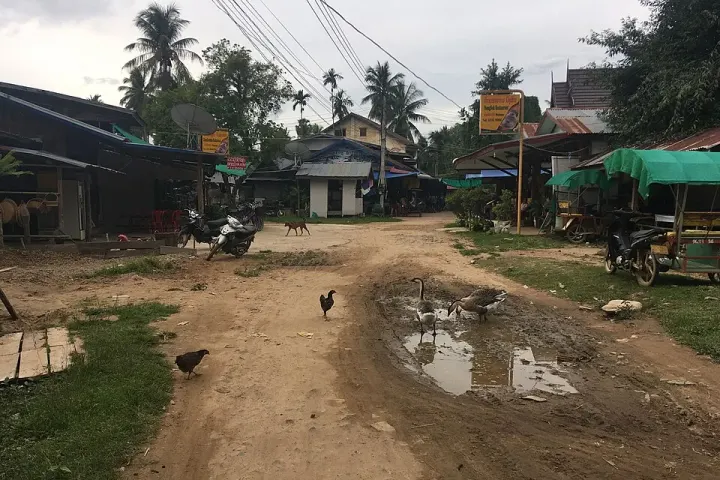
Public lanes lead past homes, gardens, workshops and temples. Stay on the route, keep entrances clear and ask before entering private space. Seek consent for close portraits and accept a refusal immediately. Children should not be encouraged to pose for gifts or money, and visitors should not treat a school or religious gathering as an open attraction. A local guide can help explain appropriate behavior when you are uncertain.
At temples, follow dress and entry instructions and maintain the quiet expected by people using the space. Do not move objects, climb structures or interrupt worship to improve a photograph. The walking guide offers practical ways to enjoy the inhabited islands without turning exploration into trespass. A modest, considerate visit usually creates a better exchange than arriving with assumptions about how local people should welcome a camera.
Make spending and waste choices useful
Locally run accommodation, meals, guiding and transport can connect your visit directly with the community. Compare services fairly, agree prices before accepting them and pay the agreed amount. Ask questions about what is included rather than pressuring a small provider to absorb costs you assumed were covered. A slightly slower visit can spread spending across meals and services while reducing the repeated transfers of a hurried checklist trip.
Carry a reusable bottle where a reliable refill source is available, reduce unnecessary packaging and take litter to appropriate disposal points. Do not leave waste beside a landing or assume the river will carry it harmlessly away. If a waste arrangement is unclear, ask your host. The practical aim is to reduce what you introduce and handle what remains responsibly, without inventing claims about recycling systems that have not been verified.
Let honesty improve the trip
Responsible travel also means being candid about uncertainty. A current photograph does not certify river safety, a tour title does not establish its pickup point and a hotel category does not prove access. Ask for the detail that affects your decision and be willing to change the plan when the answer is unsuitable. Respect an operator's cancellation or restriction rather than seeking someone willing to promise whatever you want to hear.
The islands do not need an invented wildlife encounter to justify a visit. A few days of bridge history, a waterfall viewpoint, a village meal and time beside the river can be a substantial experience. The railway guide and food guide offer ways to deepen that visit through context and everyday choices. Accurate expectations leave more room to appreciate what is actually there.
Where Mekong dolphins survive today, and the Don Sahong dam
The Mekong's remaining Irrawaddy dolphins live in Cambodia, along roughly 120 km of the main river between Kratie and Stung Treng. In December 2025 Cambodia's Ministry of Agriculture, Forestry and Fisheries put the population at 112 after researchers recorded a newborn calf at the Kampi pool in Kratie province. The Mekong population is classed as critically endangered, so even these encouraging counts describe a small, vulnerable group rather than a recovered one.
Just upstream of the border, the Don Sahong hydropower project occupies the Hou Sahong channel between Don Sahong and Don Sadam, less than 2 km from Cambodia. Its 260 MW plant began full operation in January 2020. Independent experts had warned that this channel was the only one in the Khone Falls complex passable to migrating fish in the dry season, and the project was widely criticised as a threat to the last border-pool dolphins. A river trip here shows a landscape in transition.
Questions before you go
Are there still dolphins around Don Khon?
WWF reported that the last known dolphin in the transboundary pool died in February 2022 and described likely national-level extinction in Laos. We do not present local dolphin sightings as an available visitor experience.
Does that mean the species is extinct everywhere?
No. The evidence cited concerns this local population and Laos. Other populations require separate, current conservation information; they should not be conflated with a Si Phan Don excursion.
Why do some booking pages still advertise dolphins?
Commercial copy can remain outdated. A live listing is not independent proof of a wildlife claim. Ask for current evidence and choose a route described accurately without an unsupported sighting promise.
What is a simple way to visit more responsibly?
Use local services, agree prices clearly, respect homes and temples, ask before close photography and minimize waste. Choose activities with accurate claims and respect current access restrictions.
Where can I still see Mekong dolphins?
In Cambodia, mainly between Kratie and Stung Treng; the Kampi pool in Kratie province is the best-known viewing area. Treat it as a separate trip with its own operators and conservation rules, not an extension of a Don Det boat ride.
Sources & editorial notes
We use official tourism, conservation and heritage records, operator information and accommodation listings. Publisher notes summarize the evidence; the full bibliography retains individual sources. A source check is not a live operating-status check.
- WWF-Laos ↗
- UN Tourism ↗
- UK Foreign, Commonwealth & Development Office ↗
- Lao Tourism Marketing Department ↗
- Booking.com / property listing ↗
- The Star / Xinhua, citing Cambodia's Ministry of Agriculture, Forestry and Fisheries ↗
- Wikipedia ↗