Sources checked 3 November 2026 · Confirm your date with the provider
Some links are affiliate links. We may earn a commission on qualifying bookings at no extra cost to you. This does not determine your price or guarantee availability.
Get the name and landing right
Don Khon is also written Don Khone. Don Khong is a different island farther north. Accommodation addresses sometimes include “Don Khong District,” which describes the administrative area rather than the island under your feet. Use the property's exact map pin and ask it to identify the arrival landing. Booking Pan Donkhone, for instance, requires attention to the host's Donkhon description because the platform's broader locality label can be confusing.
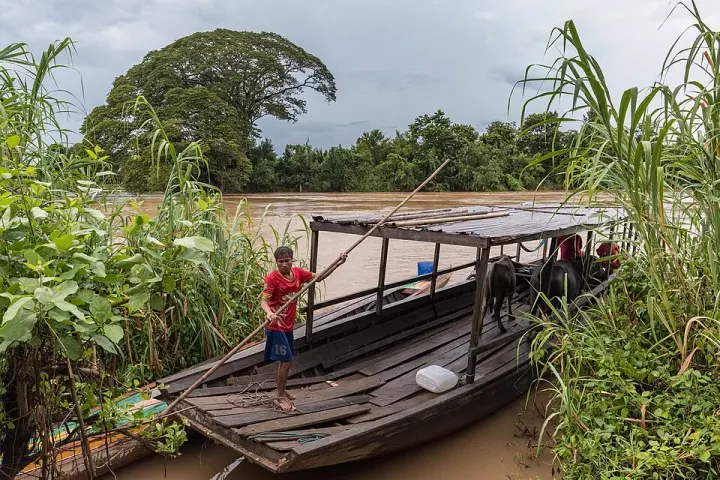
If you arrive through Nakasang, establish whether your boat goes directly to a suitable Don Khon landing or whether you will arrive on Don Det and continue overland. Do not assume a driver understands your final destination from “4000 Islands” alone. Send the hotel name and confirmation, then ask who handles the final part. The arrival guide provides a short sequence of questions that is especially useful when travelling with large bags, children or someone who needs boarding assistance.
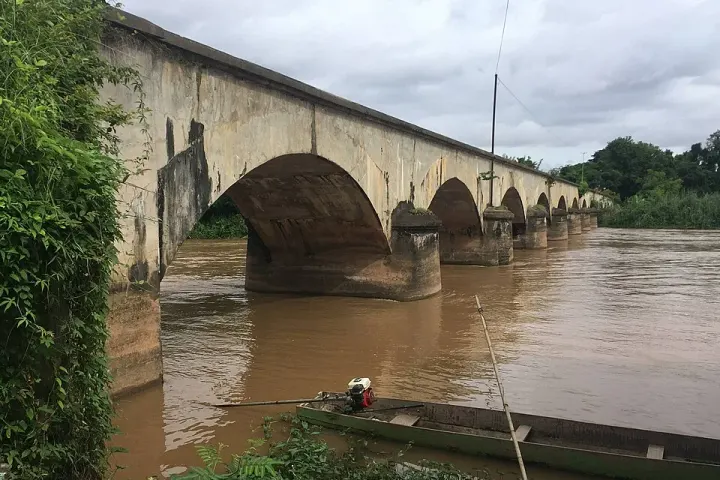
Begin around Ban Khon and the bridge
The village and bridge area is a sensible first outing because it helps you understand how Don Khon relates to Don Det. Walk slowly, look at the river frontage and locate your route back before setting off farther across the island. The bridge is a working connection as well as a historical feature. Leave space for others to pass and avoid treating the whole structure as a photography platform. River views are best enjoyed from places where stopping is clearly practical.
A short village walk can be enough on an arrival afternoon. Find dinner, ask about breakfast and decide whether the following morning is better for cycling or a waterfall visit. There is no need to begin with the longest available loop. If you are staying on Don Det, remember that reaching the bridge is only the start of the Don Khon portion of your day. The railway guide connects the bridge, route and surviving machinery into a more meaningful visit.
Treat Somphamit as a viewpoint visit
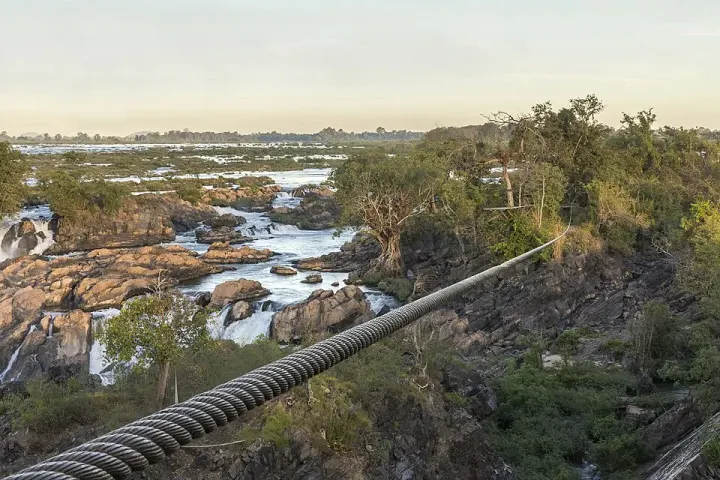
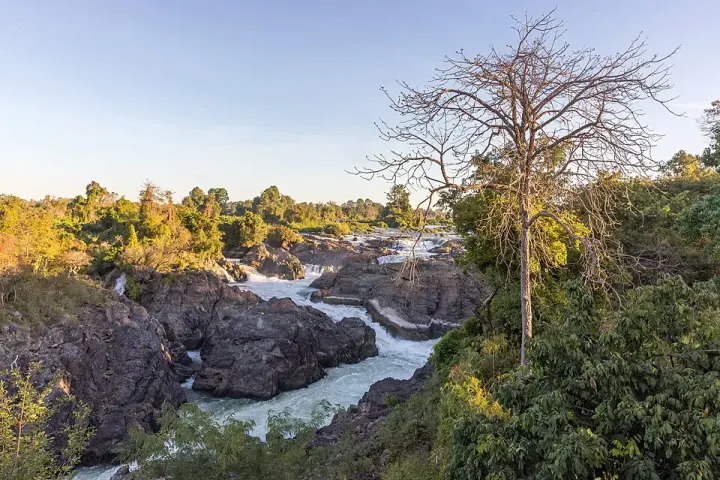
The waterfall most visitors call Li Phi is commonly identified as Tad Somphamit. The tourism authority describes its approach west of Ban Khon Tai and cautions visitors around the powerful water. Plan it as a visit to scenery and viewpoints, with time for the access route and a careful return. The sound and movement of the river are part of the experience; you do not need to move closer to the edge to appreciate them.
Check which entrances, paths and optional activities are operating on your date. A package mentioning a zipline or suspension bridges involves different equipment and physical requirements from walking to a viewpoint. Those activities should be selected deliberately, not discovered as an assumed compulsory extra after arrival. Wet surfaces, sun exposure and the ability to turn back matter more than a short distance on a map. Read the detailed Somphamit guide before combining the falls with a more ambitious bicycle circuit.
Follow the former railway route
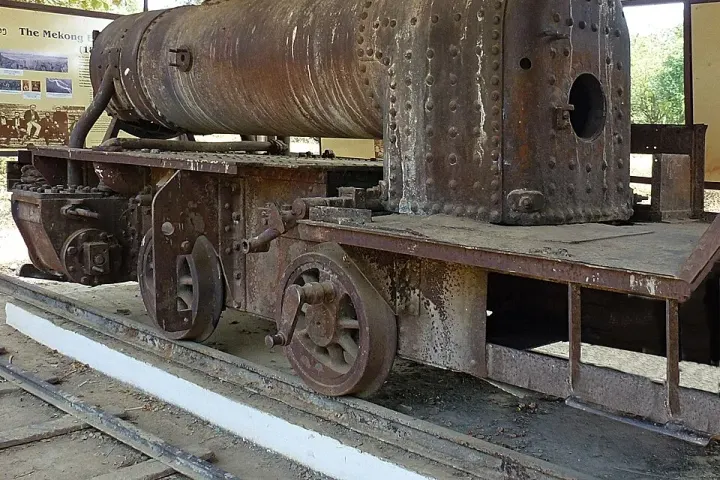
The former railway connected river transport around an unnavigable stretch of the Mekong. Its surviving bridge, route and locomotive remains give an unusual perspective on the area's colonial transport history. These pieces are spread across a living island, not necessarily presented as a single staffed museum with a complete interpretive sequence. A guide can help explain what you are seeing, while an independent visit benefits from a little context read beforehand.
Treat old machinery and structures as heritage. Do not climb on them for photographs, remove loose objects or assume that an open-looking route is maintained for visitors. If you continue toward Ban Hang Khone, ask about the current condition and the return arrangement before leaving the more familiar village area. A historical landing is not automatically an active passenger pier. Separate the interest of visiting the old transport corridor from an assumption that the same route can carry you onward today.
Choose cycling, walking or assisted transport
Cycling offers flexibility, but the route needs to match the least confident rider in your group. Check brakes, steering, tyres, saddle height and the return policy before leaving the rental point. Walk the bicycle through a narrow or crowded section rather than forcing a continuous ride. Heat and exposed stretches can be tiring even without steep hills. Bring drinking water and agree on a turning point while everyone is still comfortable.
Recent local reporting describes improved access and visitor vehicles, including electric vehicles, in Don Det and Don Khone. That offers a useful question for travellers who prefer not to cycle: ask what transport can currently reach your chosen stops. It is not evidence of universal wheelchair access. Describe steps, seat transfers and walking limits specifically. The family and access guide helps make those enquiries, and the cycling guide explains a practical pre-ride check.
Compare rooms for the stay you want
Sala Done Khone, Sengahloune Resort, Dokchampa, Pan Donkhone and Bontai provide different accommodation styles on Don Khon. Compare the booked category, not just the property name. A floating studio, upstairs room, garden bungalow and ground-floor riverfront room can have very different boarding or stair requirements. If a pool matters, confirm current availability and whether it belongs to your specific property; Sengahloune Villa and Sengahloune Resort are separate listings.
Ask how far you will walk to breakfast and dinner, whether cooling is included and how late staff can help with arrival. “River view” is an outlook description, not a swimming recommendation. Families should check balcony railings, room occupancy and bed arrangements directly. A slightly more convenient room can be worth more than an extra facility if it makes each day's movements easier. The base comparison puts Don Khon alongside Don Det, Don Khong and the Pakse gateway.
See the southern river without dolphin promises
Older travel literature often links the southern end of Don Khon with dolphin-viewing boats. That claim is outdated. WWF reported the last known dolphin in the transboundary pool dead in February 2022. You can still visit the river landscape for its channels, scenery and transport history, but wildlife sightings should not be the reason an operator gives for a local trip. Ask for the actual route and purpose if a tour description has not been updated.
The border is another reason to be precise: a scenic boat outing near the southern river is not permission to cross into Cambodia. Immigration and transport requirements are separate matters, best arranged through the proper land-border process. For most visitors, the satisfying Don Khon day remains local: village, railway, waterfall, a meal and an unhurried return. The conservation guide explains the lost dolphin population without turning an important environmental story into an attraction promise.
Questions before you go
Is Don Khone another spelling of Don Khon?
Yes. Both spellings commonly refer to this island. Don Khong is different, so verify the map pin rather than relying on a similar-looking name.
Can I visit Don Khon while staying on Don Det?
Yes, the islands are linked by the former railway bridge. Allow for your route to the bridge, the Don Khon outing and the return to your own accommodation.
Is Li Phi the same as Khone Phapheng?
No. Visitors usually use Li Phi for Tad Somphamit on the Don Khon circuit. Khone Phapheng is a separate mainland waterfall visit.
Are the old railway remains safe to climb on?
Do not treat them as play equipment. Appreciate them from public access areas and follow local signs; this guide does not certify the condition of old machinery or structures.
Sources & editorial notes
We use official tourism, conservation and heritage records, operator information and accommodation listings. Publisher notes summarize the evidence; the full bibliography retains individual sources. A source check is not a live operating-status check.
- Lao Tourism Marketing Department ↗
- Lao tourism / Asian Development Bank project publication ↗
- Lao News Agency KPL ↗
- WWF-Laos ↗
- GetYourGuide / MyProGuide Laos ↗
- GetYourGuide / Laos Easy Go Travel ↗
- Booking.com / property listing ↗