Sources checked 3 November 2026 · Confirm your date with the provider
Some links are affiliate links. We may earn a commission on qualifying bookings at no extra cost to you. This does not determine your price or guarantee availability.
Begin with the river barrier
The powerful falls and rapids in this part of the Mekong prevented a simple continuous navigation route. The colonial railway provided a way to move transport and cargo around that obstacle. Looking at the river first helps explain why a railway appeared on these small islands at all. The story is about connecting interrupted journeys, not about an ordinary inland rail line running through a town.
Keep the historical context distinct from present-day transport. The surviving structures do not constitute an operating passenger railway, and a former pier is not automatically a current ferry terminal. Avoid planning a transfer from the historical route's existence. Today's arrival guide explains the road-and-boat journey, while Khone Phapheng and Somphamit show the river landscape that gives the older route its meaning.
Cross the bridge as a working connection
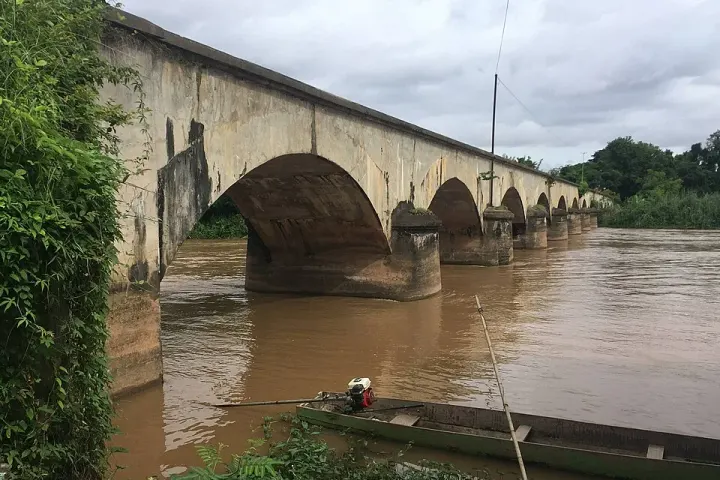
The bridge links Don Det and Don Khon, not Don Khong. A Lao tourism and development publication dates the French-built railway bridge to 1910. Today, its practical value to visitors is the connection between the two island areas. Cross attentively and share the route with other users. If you want to stop for a photograph, choose somewhere that does not force pedestrians or riders around you awkwardly.
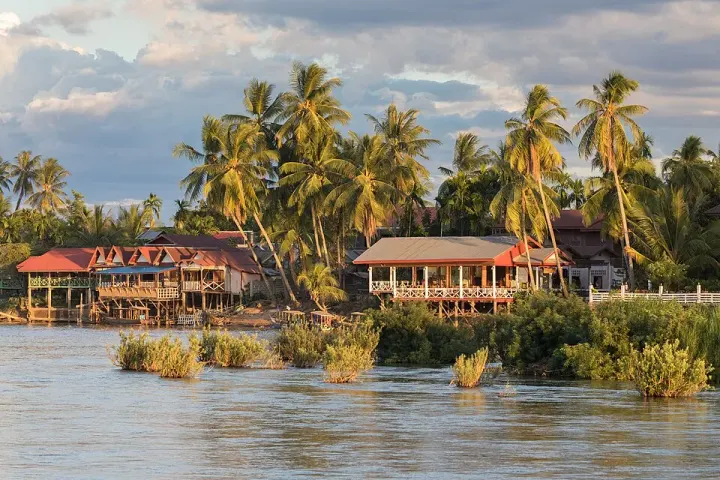
The river views from the bridge help reveal the relationship between the banks, houses and channels. Notice how the visitor-facing waterfront sits within a wider working landscape. Do not assume that every visible riverside platform is public access. The bridge is a useful orientation point, but it is only one part of a day's walk or ride. Allow time to reach it from your accommodation and to continue beyond it without rushing.
Look at the locomotive remains respectfully
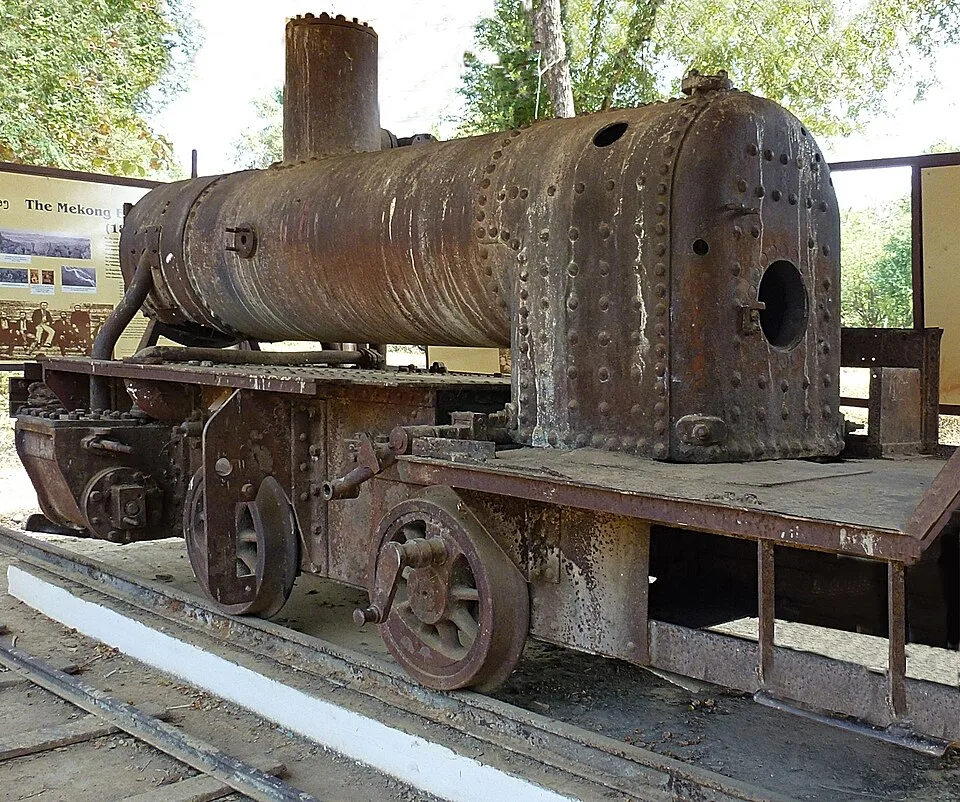
Surviving locomotives give a tangible scale to the railway story. Their machinery invites closer observation, but heritage remains should not be treated as climbing equipment. Look from permitted areas, avoid moving parts or loose objects and follow any local signs. A photograph taken years ago with people standing on a locomotive is not permission to do the same or evidence of its current structural condition.
A guide can explain what is known about the machinery and how it relates to the route. If visiting independently, be comfortable leaving a detail unresolved rather than inventing a confident label from appearance alone. This guide does not assign unverified engine specifications, manufacturing dates or military histories. The reliable central point is the connection between the railway and the challenge of moving past the Mekong's unnavigable section.
Follow a manageable part of the route
You do not need to trace every historical metre to appreciate the railway. A village-based visit combining the bridge and accessible locomotive area can be satisfying, especially on a hot day or after arrival. If continuing farther toward the southern end of Don Khon, ask about current paths, shade and the return. Old route alignments may pass through places whose present-day access and condition vary.
Choose footwear for the actual surface and carry water. Stay on public or clearly permitted routes and respect houses, fields and working spaces along the way. If an informal path becomes uncertain, return or ask locally. The walking guide suggests turning-point planning, and the cycling guide helps you decide when a bicycle adds useful reach rather than creating an obligation to cover more ground.
Give Ban Hang Khone and old piers context
The southern part of Don Khon includes places associated with the old river-and-rail transport system. Visiting an old landing can help you picture how boats and rail movements connected. Before setting out, establish which site you mean and whether it is reachable by your chosen route today. A historic name in a guide does not confirm an active service, staffed entrance or maintained viewing platform.
This is also an area where old dolphin-tour descriptions can confuse the purpose of a visit. Go for the landscape and history, not a promised local dolphin sighting. WWF reported the last known dolphin in the border pool dead in 2022. If a provider combines railway history with a southern river excursion, ask for the present route and interpretation rather than accepting an unchanged description from an older tourism brochure.
Pair the history with a thoughtful island day
The railway fits naturally with a Don Khon village walk and Somphamit visit because the river barrier connects the subjects. A guide can add historical context, while an independent day gives you more control over stops and rest. Decide which matters more to you and compare the actual services. A bicycle rental, a guided bike tour and a transport-only arrangement are different purchases even when all pass the same locomotive.
Avoid treating the bridge and machinery as isolated photo trophies. Spend time noticing how residents use the surrounding routes and how tourism has grown around them. Buy a meal or drink from a local business if it suits your day, and ask before photographing people at work. The responsible travel guide offers the broader approach: historical interest is strongest when it leaves room for the present-day community.
Railway dates at a glance
Published histories summarised on Wikipedia give the outline. A first portage line opened on Don Khon in 1893, running about 4 km between the Ban Hang Khon area and Ban Khon, initially at 600 mm gauge, and a permanent railway was in place by 1897. In the 1910s the line was extended across the bridge to Don Det, for a total of about 7 km. The last train reportedly ran in 1940.
The best-known survivor is the locomotive kept under a shelter at Ban Khon, which is often identified as Eloïse; published railway histories describe it as an Orenstein & Koppel engine of 1911 and the only surviving steam locomotive in Laos, details we could not confirm on site. The rails themselves are gone, but the former trackbed can be walked or cycled, which is why the railway makes such a natural thread for a day on Don Khon.
| Date | Milestone |
|---|---|
| 1893 | First portage line opens on Don Khon, about 4 km |
| 1897 | Permanent railway in place |
| 1910 | Railway bridge date given by a Lao tourism-development publication |
| 1910s | Line extended to Don Det, about 7 km in total |
| 1940 | Last train reportedly runs |
Questions before you go
Does the railway still carry passengers?
No operating passenger service is presented here. Visit the surviving bridge and remains as heritage; use current road and boat arrangements for transport.
Which islands does the French bridge connect?
Don Det and Don Khon. Don Khong is a separate, larger island farther north, despite the similar name.
Do I need a guide?
A guide can add interpretation, but a manageable independent visit is possible where public access permits. Choose based on your interest in context and the route you want to cover.
Can I follow the railway all the way to an active pier?
Do not assume a historical landing still serves passenger boats. Confirm any present-day departure separately with your host or transport operator.
How long was the railway?
About 7 km in total once it was extended to Don Det in the 1910s. The original 1893 section on Don Khon was about 4 km long.
Sources & editorial notes
We use official tourism, conservation and heritage records, operator information and accommodation listings. Publisher notes summarize the evidence; the full bibliography retains individual sources. A source check is not a live operating-status check.
- Lao tourism / Asian Development Bank project publication ↗
- Lao Tourism Marketing Department ↗
- GetYourGuide / MyProGuide Laos ↗
- GetYourGuide / Southern Breeze Joint stock company ↗
- Booking.com / property listing ↗
- Wikipedia ↗