Sources checked 3 November 2026 · Confirm your date with the provider
Some links are affiliate links. We may earn a commission on qualifying bookings at no extra cost to you. This does not determine your price or guarantee availability.
Let your accommodation determine the first walk
Begin with the immediate neighborhood: find the route to your arrival landing, a place to eat and the lane back to your room. This first orientation is particularly useful on Don Det, where a riverfront address does not mean every property is beside the same pier. Ask your host to identify a simple public loop or an out-and-back route, and save the accommodation name and map pin offline before leaving.
For a first afternoon, a short river-facing walk with a seated stop often serves you better than setting out for a distant waterfall. It gives you a sense of surface, shade and traffic without committing to a long return. Arrival fatigue is easy to underestimate after a road transfer and boat crossing. The arrival guide explains why the first day's activity should remain adjustable.
Use the bridge area for a historical walk
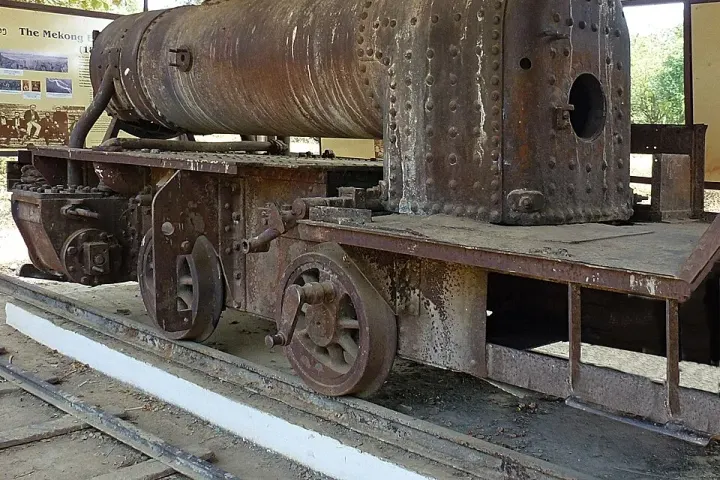
The former railway bridge between Don Det and Don Khon provides a clear focus. Approach from your own island, spend time reading the landscape and continue only as far as your energy allows. The railway story connects the bridge with locomotive displays and the southern river port; those features need not all be visited in a single walk. Our railway guide explains the relationship between them.
This is an active crossing rather than a private viewing platform. Keep space for other users, avoid stopping in a narrow passage and supervise children closely. The photograph you have seen may show quiet conditions that do not match your visit. Ask locally about current pedestrian access, any maintenance and the best place to pause without obstructing people.
Separate waterfall walking from island distance
Reaching a waterfall visitor entrance and walking around its viewpoints are different parts of the outing. At Li Phi, preserve time and energy for the site itself, including any exposed sections, steps and return walking. Ask the staff which paths are currently open and where barriers or temporary closures apply. A river view does not require approaching the water's edge beyond marked visitor areas.
If you are staying far from the entrance, arrange suitable local transport or a guided combination rather than using the waterfall as an excuse for an overlong walk. Available transport and accessibility need confirmation for your date. The Li Phi guide helps distinguish this island outing from mainland Khone Phapheng, which should not be added as though it were the next stop on the same footpath.
Walk through villages without treating them as displays
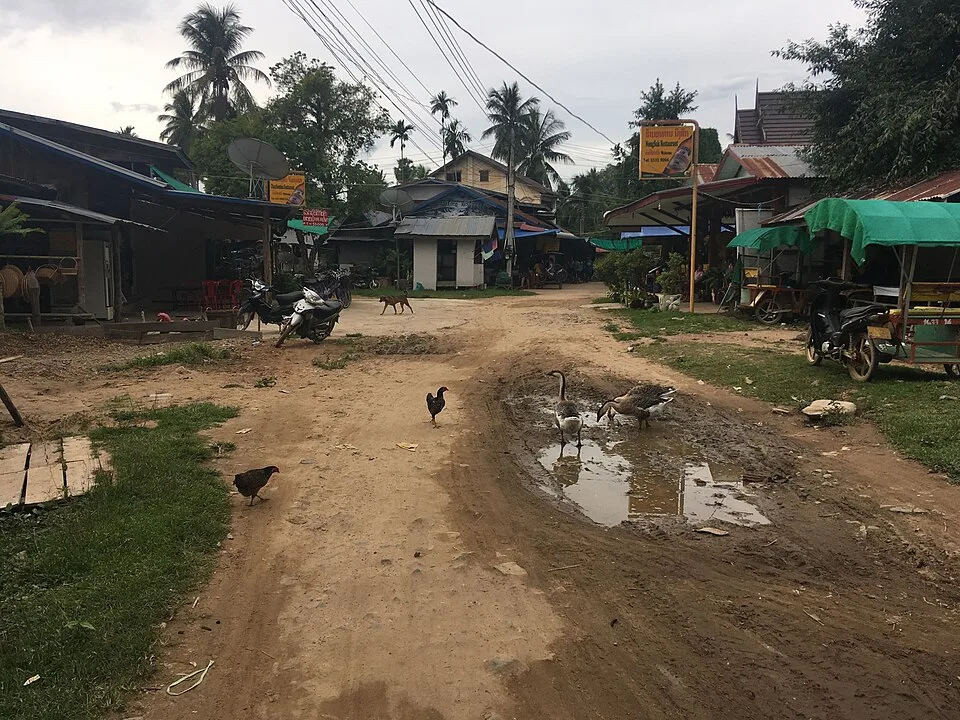
A village lane is a place where people live and work. Stay on the public route, leave entrances clear and seek permission before stepping into a yard or photographing a person closely. A friendly greeting is welcome, but it does not imply consent to a portrait. Avoid interrupting a meal, religious activity or work merely to create a photograph. When someone declines, put the camera away without bargaining.
At temples, follow posted instructions and local guidance, dress respectfully and remove shoes where required. Ask before entering a building if access is unclear. Do not climb on structures or move objects for a better image. Small purchases at locally run shops can be a straightforward way to support the community, but keep commercial exchanges separate from unsolicited gifts to children.
Plan the return before the attractive detour
Choose a turnaround point while you are still fresh. Carry drinking water, a hat and footwear appropriate for wet or uneven surfaces; a riverfront stroll can quickly become uncomfortable when your only footwear slips. Take a charged phone and a light, but do not use them as a reason to plan a remote return after dark. Save the host's contact and know how you would describe where you are if you need help.
Avoid assuming that a lane beside a field continues around the island. It may serve a home or end at a working landing. FCDO advice to remain on well-used routes because of unexploded ordnance also argues against improvising across overgrown ground. If the route is not clear, return by the way you know. The island is more enjoyable when exploring does not become a navigation problem.
Adapt the outing for heat, rain and different abilities
A short walk can still be demanding for someone with balance, mobility or fatigue concerns. Ask about the actual surface, steps, handrails, seating and toilets along the intended route. Recent road improvements are useful context but do not establish a continuous accessible path between your room and every attraction. A good plan may involve a brief walk near the hotel followed by a longer rest with a river view.
After rain, ask which sections remain practical and postpone an outing if conditions deteriorate. River height and path conditions are not interchangeable: a dry-looking village lane tells you little about the safety of a river activity. For mixed-ability groups, agree a meeting point and a shorter option in advance. Our family and access guide gives a more detailed list of questions to send to hosts.
Questions before you go
Can I see both Don Det and Don Khon entirely on foot?
The bridge permits a connected outing, but covering both islands comprehensively can involve more walking than a casual visit suggests. Choose a focused route from your actual lodging and keep an easy return.
Is there a guaranteed accessible walking circuit?
We have not verified one. Ask a host or guide for recent details and photographs of surfaces, steps, toilets and transport. General road improvements do not establish step-free access.
Can I walk to Khone Phapheng from Don Khon?
Treat Khone Phapheng as a separate mainland excursion requiring a transport plan. It is distinct from Li Phi on the Don Khon visitor circuit.
Is it all right to wander through fields for photographs?
Stay on established public routes and seek permission before entering private or cultivated land. Avoid overgrown shortcuts and respect the work taking place around you.
Sources & editorial notes
We use official tourism, conservation and heritage records, operator information and accommodation listings. Publisher notes summarize the evidence; the full bibliography retains individual sources. A source check is not a live operating-status check.
- Lao Tourism Marketing Department ↗
- UK Foreign, Commonwealth & Development Office ↗
- Lao News Agency KPL ↗
- Booking.com / property listing ↗