Sources checked 3 November 2026 · Confirm your date with the provider
Some links are affiliate links. We may earn a commission on qualifying bookings at no extra cost to you. This does not determine your price or guarantee availability.
Understand the three names
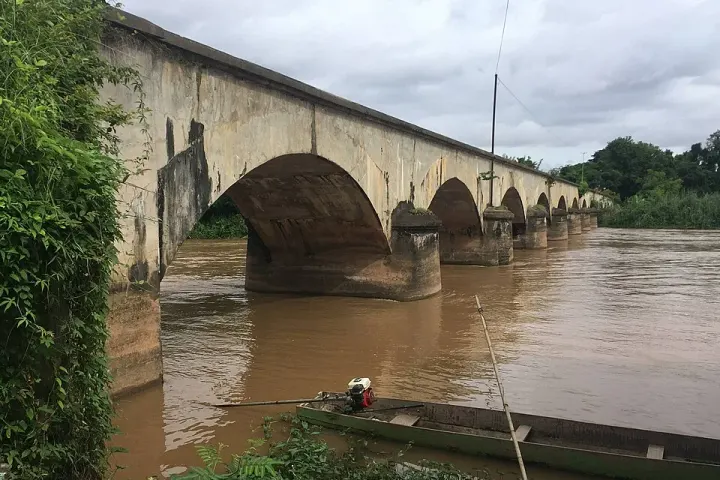
Don Det and Don Khon are neighbouring islands connected by the former railway bridge. They work together as a compact visitor area: stay on one and explore parts of the other by bicycle, on foot or with locally arranged transport. Don Khong is the larger island farther north. The extra letter matters when you book a room or tell a driver your destination. A listing with “Khong District” in its address can still be on Don Det or Don Khon because the district name covers a wider area.
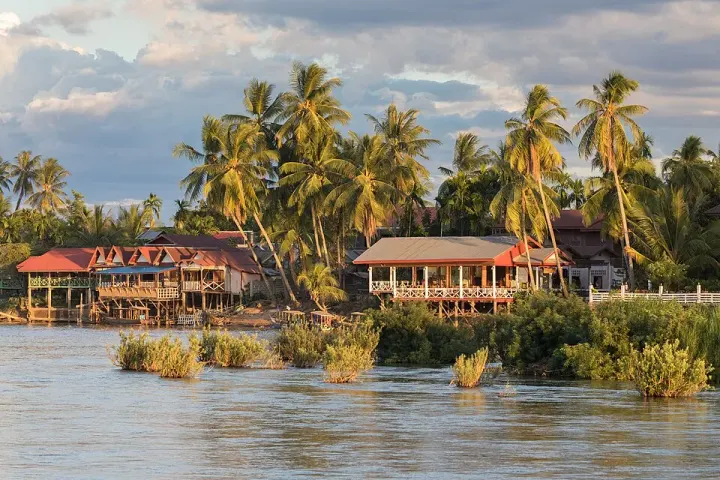
Think of the islands as communities rather than interchangeable resorts. Don Det has a concentration of traveller services around its northern arrival area and different riverside lodging stretches. Don Khon places you close to railway heritage and the Somphamit waterfall circuit. Don Khong suits a slower road-based stay around Muang Khong and surrounding countryside. The accommodation guide explains how those choices change the journey from your room to dinner, a tour meeting point or a mainland vehicle.
| Base | What distinguishes it | Arrival question |
|---|---|---|
| Don Det | Connected to Don Khon by the old railway bridge; several visitor neighborhoods | Which landing serves my accommodation? |
| Don Khon / Don Khone | Railway heritage and the Li Phi visitor circuit | Am I booked on Don Khon, rather than Don Khong? |
| Don Khong | Separate larger northern island with road access and Muang Khong stays | Which road transfer reaches my actual hotel? |
Make the arrival a separate piece of the trip
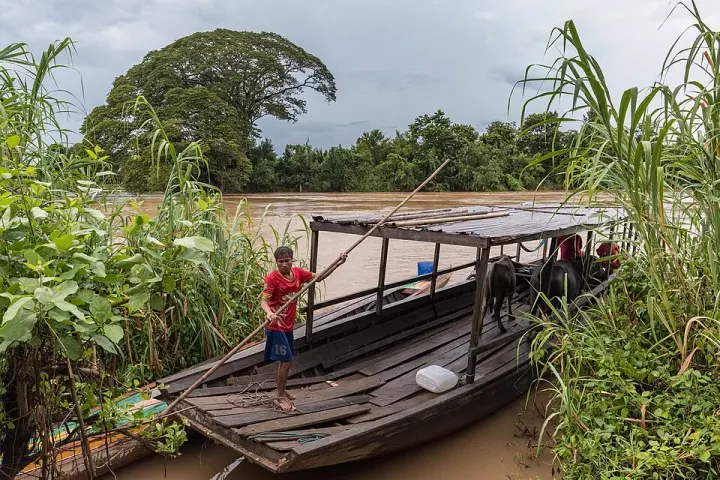
Many visitors approach the southern islands through Nakasang, combining a road journey with a passenger boat. “Pakse to 4000 Islands” is not a sufficiently precise booking description. Establish whether the ticket ends at Nakasang, the main Don Det landing, another pier or your accommodation. A bargain vehicle fare can become less convenient if the boat, luggage movement and final walk are left unresolved. Send your host the name on your ticket before departure and ask where you should actually disembark.
Plan to reach the boat connection while daylight and confirmed staff assistance are available. This guide does not publish a universal last-boat time because an authoritative, current timetable covering every service has not been verified. A late flight into Pakse is a good reason to consider an overnight there. That is an editorial planning recommendation, not an assertion that every evening crossing is impossible. Start with the complete arrival route and keep a workable fallback before paying for an inflexible island room.
Put the waterfalls on the correct map
Li Phi, generally presented to visitors as Tad Somphamit, belongs to the Don Khon sightseeing circuit. Khone Phapheng is a different outing on the mainland east of the southern islands. They show different parts of the Mekong's powerful passage through the area. Do not book accommodation because it claims to be “near the falls” without establishing which falls and what transport is needed. A river view from your balcony is not evidence that a waterfall can be reached directly by boat.
Choose one waterfall as the main purpose of a morning or afternoon and leave time for the approach, viewpoints and return. Paths, steps and exposed sections can make a short map distance feel longer in heat or rain. Ask about current access before adding a zipline, suspension bridge or lesser-used path. The Li Phi guide and Khone Phapheng guide separate those decisions, including the mainland transfer that is easily overlooked when visitors try to combine everything.
| Waterfall | Practical location | How to plan it |
|---|---|---|
| Li Phi / Tad Somphamit | Don Khon visitor circuit | Combine with an island outing; check paths and access |
| Khone Phapheng | Mainland, east of Don Khon | Arrange a separate road excursion or specifically booked transfer stop |
Decide how active you want to be
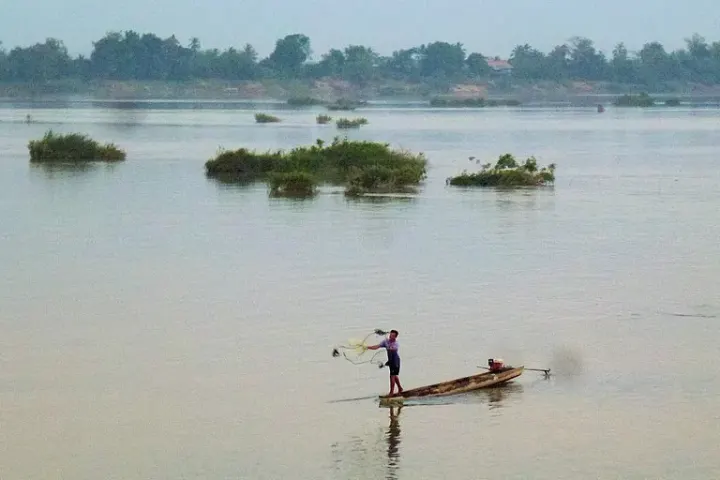
A satisfying island visit does not require kayaking. Walking between public village lanes, spending time by the river and exploring the former railway area can make a full day. Cycling covers more ground but needs confidence on the actual surfaces and among local traffic. Recent access improvements mean neither “all paved” nor “all rough dirt” is a reliable description of every route. Test a rented bicycle and ask your host which sections are comfortable today before setting out on a long loop.
Guided kayaking and bike-and-boat products are available, but their booking titles can be misleading about the starting point. One verified bike tour carries a Pakse prefix while listing Don Det and Don Khon pickup. Read the actual collection instructions. For water activities, ask about lifejackets, weather decisions, paddling ability and the option to decline an unsuitable section. If your group has mixed abilities, a shorter shared outing followed by separate free time often works better than choosing the longest available product.
Give yourself unstructured time
Two island nights can provide an arrival afternoon and one full day, but three nights give more room for different interests and changing conditions. These are suggested trip shapes, not minimum-stay rules. A compact visit might focus on the bridge, railway remains and Somphamit. A longer stay can add a guided river excursion or a mainland waterfall day without making either the compulsory centre of the trip. Keep at least one morning free of a fixed departure if you value a relaxed pace.
There is little benefit in moving rooms between Don Det and Don Khon solely to collect island names. Compare the effort of packing, settling bills and carrying bags with the time you would spend crossing the bridge for an outing. Don Khong is a more meaningful change of base because its geography and atmosphere differ. For a first visit, use the three-day outline as a starting point, then add nights where you actually want more time rather than adding every regional attraction.
Set realistic expectations for services
A room's photographs cannot tell you whether it has the cooling, bathroom, bed arrangement or access that you need. Check the booked category and ask about power or internet contingencies if those are essential to your trip. Prepare enough accessible spending money for confirmed transport and initial meals; do not base a late arrival on an unverified assumption about a working ATM or foreign card acceptance. Keep your booking, meeting location and host contact available offline.
The same principle applies to food and activity bookings. Explain dietary restrictions in specific ingredient terms and give a small kitchen time to respond. Clarify whether a tour includes an entrance fee, lunch and return transport rather than relying on a photograph of a meal. When an arrangement changes, a clear written record is more useful than remembering that somebody said “everything included.” These small checks preserve the relaxed part of the visit once you arrive.
Leave outdated wildlife expectations behind
Older guides and even some current booking pages still advertise dolphin spotting near the Laos–Cambodia border. WWF reported the death of the last known dolphin in that transboundary pool in February 2022, describing it as likely national-level extinction for Laos. This guide therefore does not promise local dolphin sightings. The landscape remains worth visiting for its river systems, village life, history and waterfalls; it does not need an obsolete wildlife claim to make a compelling trip.
Choose activities whose value is clear without a wildlife guarantee. Ask permission before photographing people, use public routes, avoid entering fields for a better angle and keep waste away from the river. A boat journey is also somebody's workplace and local transport corridor. The responsible travel guide explains the conservation context and practical ways to spend locally, while river awareness helps you separate attractive scenery from a safe place to enter the water.
Questions before you go
Is Si Phan Don a beach destination?
It is a Mekong river-island region. Sandy banks may appear, but they are not evidence of safe swimming. Currents, changing levels and hidden obstacles require a different approach from a supervised beach holiday.
Which island is best for a first visit?
Don Det or Don Khon is usually the simplest editorial starting point if you want the connected island circuit. Choose Don Khong when its larger rural setting and road access better match your plans.
Can I see the islands in a day from Pakse?
Verified day trips exist. They involve substantial transport and offer a different experience from staying overnight. Confirm the actual island route, boat arrangements and return before comparing headline prices.
Should I book a dolphin tour?
Do not book on the expectation of seeing dolphins near Don Khon. The last known animal in the border pool died in 2022; ask any operator retaining that claim to explain and correct its itinerary.
Sources & editorial notes
We use official tourism, conservation and heritage records, operator information and accommodation listings. Publisher notes summarize the evidence; the full bibliography retains individual sources. A source check is not a live operating-status check.
- Lao Tourism Marketing Department ↗
- WWF-Laos ↗
- UK Foreign, Commonwealth & Development Office ↗
- Lao News Agency KPL ↗
- GetYourGuide / MyProGuide Laos ↗
- GetYourGuide / Southern Breeze Joint stock company ↗
- Booking.com / property listing ↗